

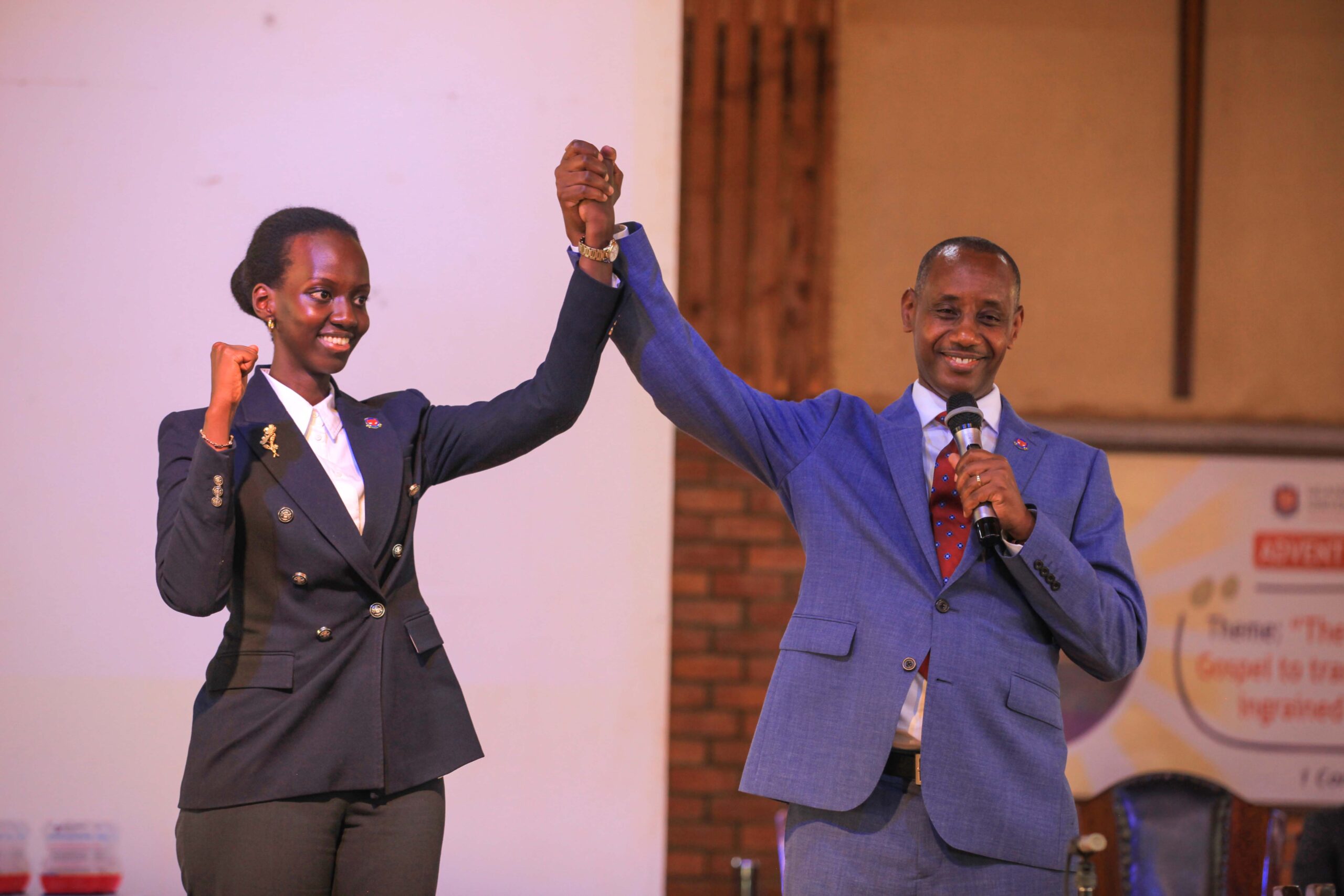
Uganda Christian University (UCU) Vice Chancellor, Professor Aaron Mushengyezi, has delivered his Inaugural Professorial Lecture, marking a major milestone in his academic career and bringing his scholarship on African orature and media culture into focus.
Prof. Mushengyezi delivered the lecture on Wednesday, July 1, 2026, at Nkoyoyo Hall, UCU Main Campus, Mukono, under the theme “A Historiography of Orature and Media Culture for Young People in Uganda.”
The lecture examined the evolution of African oral traditions and the changing ways young people encounter, consume and engage with culture in an increasingly digital world.
An Inaugural Professorial Lecture is a formal public lecture delivered by a scholar upon attaining full professorship. It provides an opportunity for the professor to share their area of scholarship, reflect on their academic journey and contribution to knowledge, and highlight emerging areas of research.
For Prof. Mushengyezi, the lecture also marked his formal entry and celebration as a full professor, having previously served as an Associate Professor.
Preserving Africa’s stories in the digital age
At the centre of Prof. Mushengyezi’s lecture was a warning that Africa’s rich oral traditions risk losing their cultural depth and authenticity as they are increasingly transformed into digital formats without preserving the performance elements that give them meaning.
He noted that while technology presents new opportunities to preserve and share indigenous knowledge, the transition to digital platforms must not strip African storytelling of the cultural elements that make it unique.
Today, folktales, legends, songs and proverbs are increasingly being adapted into animations, cartoons, podcasts, videos, audiobooks and interactive applications. Prof. Mushengyezi described this convergence of technology and oral culture as “technoture”, a concept he uses to explain the digital evolution of traditional orature.
“The digital age is here to stay,” he said, arguing that the key question is no longer whether African oral traditions should embrace technology, but how they can make that transition without losing their cultural identity.
He explained that African oral storytelling is more than the words being told. It is a performance tradition in which meaning is also communicated through voice modulation, rhythm, pauses, gestures, facial expressions, audience participation and the interaction between the storyteller and the community.
“Some aspects of orature are untranscribable, while others are simply untranslatable,” he said.
Prof. Mushengyezi cautioned that converting oral performances into digital formats can therefore capture only part of the original experience, leaving behind subtle cultural meanings embedded in live performance.
He emphasised that orature has historically played an important role in African communities by preserving history, transmitting indigenous knowledge, teaching moral values, reinforcing cultural identity and strengthening social cohesion.
He called on scholars, educators, publishers, policymakers and digital content creators to ensure that technology complements rather than replaces the cultural foundations of African storytelling.
“The challenge is not whether African orature should enter the digital age,” he said. “The challenge is ensuring that future generations inherit not only the stories themselves but also the cultural meanings, values and performance traditions that give those stories life.”
A scholar committed to African heritage
Prof. Mushengyezi has devoted much of his academic career to documenting, preserving and interpreting indigenous storytelling traditions.
Before his appointment as UCU Vice Chancellor in 2020, he served as Dean of the School of Languages, Literature and Communication at Makerere University, where he built a distinguished record in African literature, children’s literature, media studies, cultural preservation and oral performance.
He has authored and edited numerous books on African literature, orature and media studies. He also co-edited Kavunuuzi y’Orunyankore/Rukiga omu Rungyereza (Runyankore/Rukiga-English Dictionary) alongside President Yoweri Kaguta Museveni and other scholars, reflecting his longstanding commitment to preserving and promoting indigenous languages.
Commenting on the lecture, Rt. Rev. Prof. Alfred Olwa, Bishop of the Diocese of Lango, described it as “much more than an academic presentation,” saying it was “a compelling reminder that the stories a society tells shape the future it builds.”
“When a people lose their stories, they gradually lose their identity. When young people lose their identity, they become vulnerable to every passing ideology, every fashionable narrative and every digital current,” he said.
Rt. Rev. Prof. Olwa added that the lecture showed that orature is “not merely the memory of yesterday” but “a living resource for tomorrow”, connecting inherited wisdom with emerging technologies, local voices with global conversations, and enduring values with contemporary realities.
The inaugural lecture was preceded by panel discussions featuring senior UCU faculty members, who reflected on the role of academic traditions in higher education and the contribution of scholarship to society.
Prof. Mushengyezi’s lecture therefore brought together his longstanding academic interest in African orature with one of the defining realities of the present age, the growing influence of digital media on how young people access, experience and preserve culture.

UCU researchers develop three new nakati varieties
Renowned for its research excellence, the Uganda Christian University (UCU) Faculty of Agricultural
UCU Celebrates 26th Guild Government Swearing-In
Home Students Research Academics About Us Contact Us X UCU student narrates journey

UCU engaged in phase 2 of Uganda’s yellow fever vaccination campaign
UCU engaged in phase 2 of Uganda’s yellow fever vaccination campaign By Irene
“Make Generosity a LifeStyle,” UCU Community Urged.
“Make Generosity a LifeStyle,” UCU Community Urged Uganda Christian University (UCU), in partnership