- Phone : +256312350800
- Email : info@ucu.ac.ug

By Jimmy Siyasa
MUKONO – Researchers at Uganda Christian University (UCU) have identified an effective, low-cost remedy in the fight against non-communicable diseases (NCDs) among Uganda’s elderly: the indigenous vegetables already growing in many Ugandan backyards.
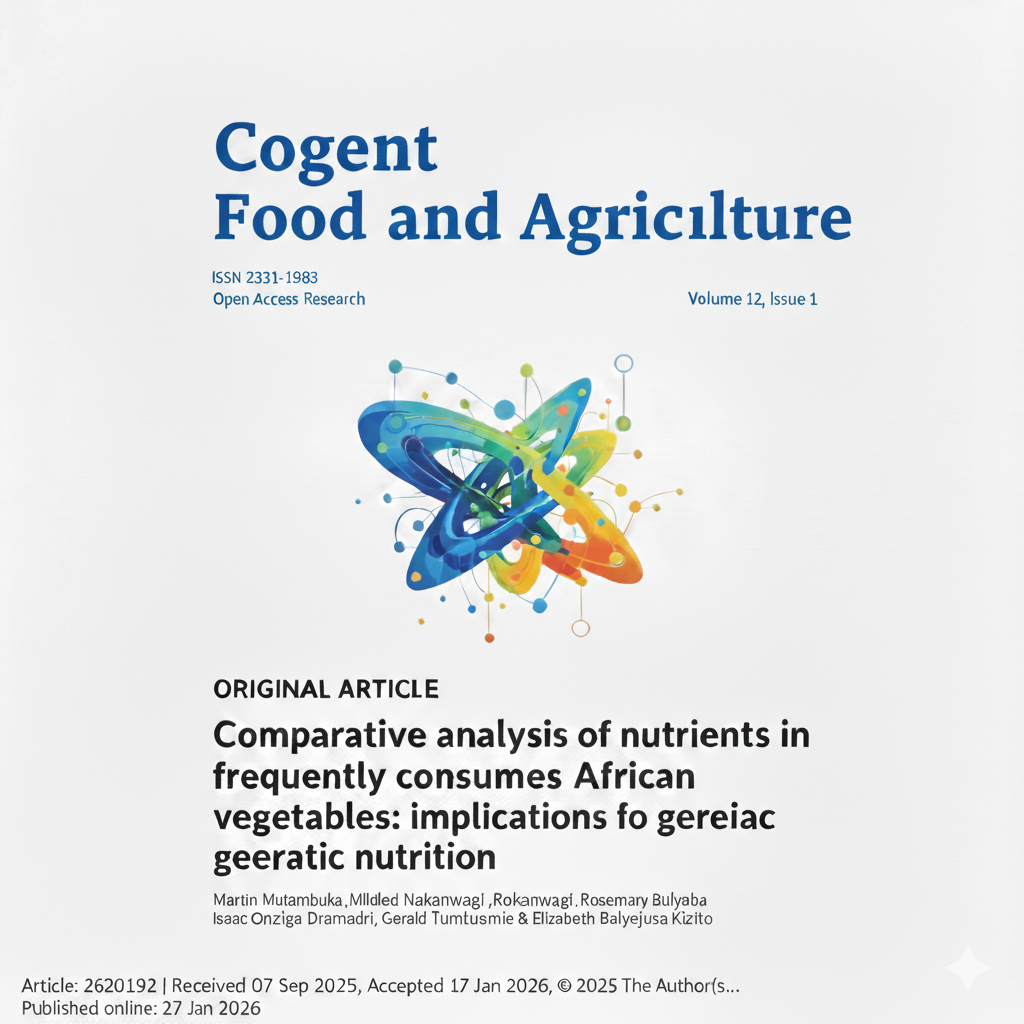
A new study from the Faculty of Agricultural Sciences, recently published (January 27, 2025) in the scientific journal Cogent Food & Agriculture, reveals that traditional greens like Nakati (African eggplant), Doodo (Amaranth), and Gganywa (Cowpea leaves) are packed with specific minerals and antioxidants that can significantly improve the health of adults aged 50 and above.
The research comes at a critical time, where “globally, NCDs account for 75% of all deaths,” according to World Health Organization (WHO), as of 2025. In Uganda, NCDs—including heart disease, diabetes, and hypertension—are now the leading cause of medically certified deaths. According to the Ministry of Health (2023 report), these “lifestyle diseases” disproportionately affect older populations.
Much wonder why such is the trend in a country with 85% arable land and a vast variety of vegetables among other crops. One of the researchers, Dr. Rosemary Bulyaba, partly attributes the low consumption of African Indigenous vegetables (AIVs) despite abundance and high nutritional content to “negative perceptions and attitudes towards consumption of AIVs,” she says, citing economic stereotypes among some Ugandans that vegetables are a staple for low income earners.
“For many African households, AIVs like cowpea and nakati are consumed when families are on the wall, when cash is low.”
Nevertheless, this does not negate the rich, nutrient density of African indigenous vegetables.
The team, which included Martin Mutambuka (PhD), analyzed 12 different varieties of common Ugandan vegetables. Their goal was to find which specific plants could best address the nutritional needs of the elderly, such as bone density, heart health, and digestion.
For Strong Bones: The study found that Solanum aethiopicum Shum (a variety of Nakati) contained the highest levels of calcium and zinc. These minerals are vital for preventing osteoporosis and boosting immune function in seniors.
For Heart Health: Cowpea leaves (Gganywa) emerged as the champion of antioxidants. Rich in anthocyanins and flavonoids, these leaves help “scavenge” free radicals that damage blood vessels, potentially reducing the risk of stroke and heart attack.
For Digestion: The researchers found that leafy vegetables provided significantly more dietary fiber than fruit-based vegetables. High-fiber diets are essential for older adults to maintain gut health and prevent chronic constipation.
The UCU team highlighted that these vegetables are not only nutrient-dense but also inexpensive and culturally familiar. However, the study noted that “hidden hunger (micronutrient deficiency) despite eating enough calories— remains a threat because many people do not know which specific varieties offer the best benefits.
The Faculty of Agricultural Sciences is now calling for further research into how soil types and cooking methods across different regions of Uganda impact these nutrients. They also recommend that national agricultural programmes prioritize these high-nutrient genotypes and to help transform Uganda’s food system into a proactive healthcare ‘tool’- especially for aging/elderly people.
The Research Team includes: Martin Mutambuka (PhD, Food Science and Technology), Mildred Nakanwagi (MSc, Agriculture Plant Breeding), Rosemary Bulyaba (PhD, Agronomy, Crop Production and Physiology), Isaac Onziga Dramadri (PhD, Plant Breeding, Genetics and Phenomics), Gerald Tumusiime (PhD, Surgery) and Elizabeth Balyejusa Kizito (PhD, Plant Breeding). All UCU, MUK and KYU-based scholars