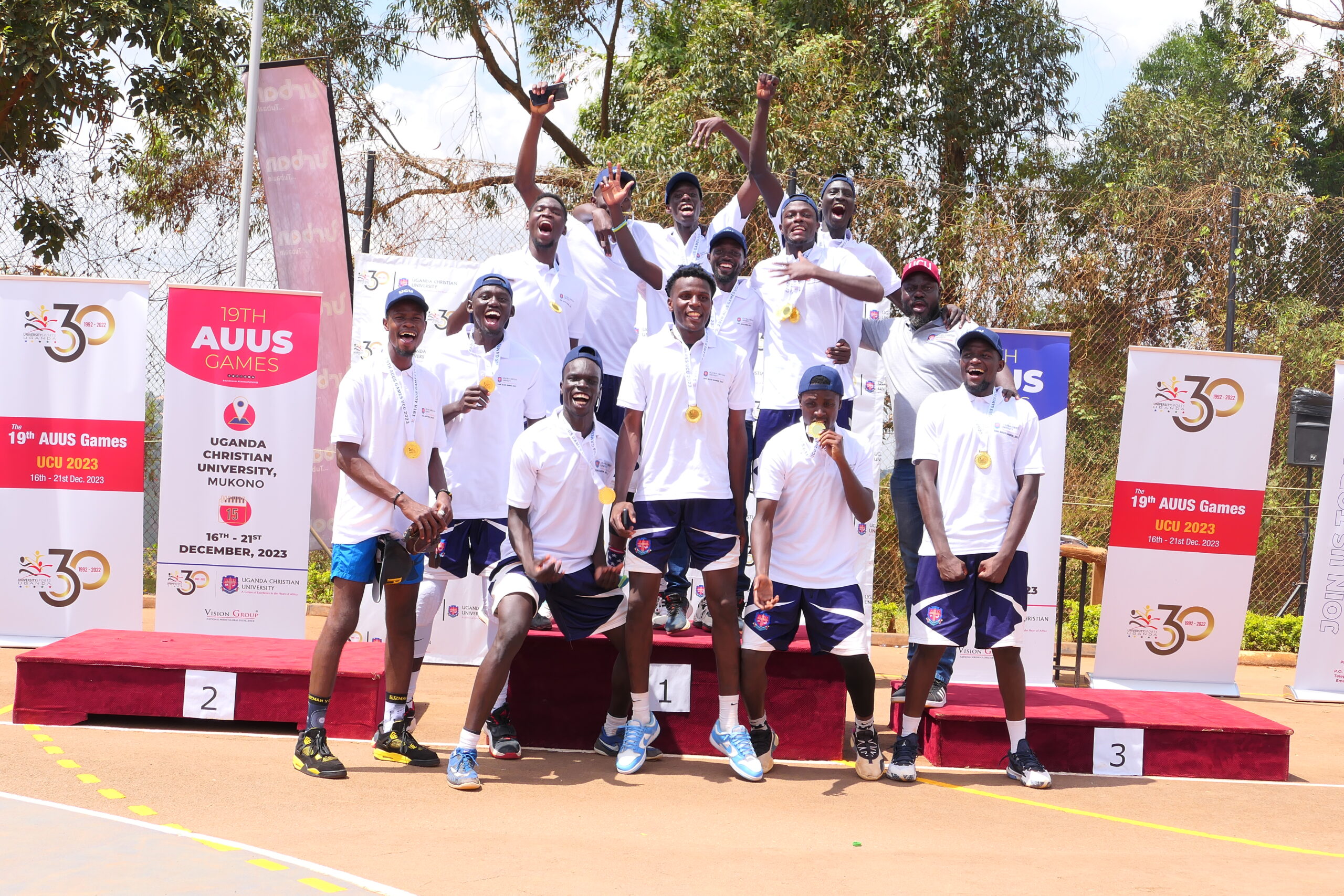
UCU to host AUUS Games 16th Dec 2023
Uganda Christian University (UCU) has expressed readiness to host Inter-University games that will

By Jimmy Siyasa
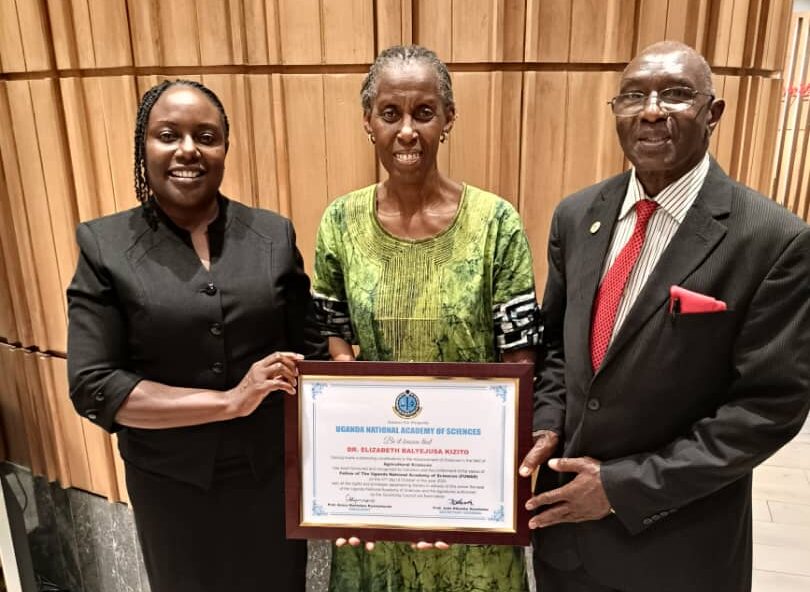
In a historical happening, Uganda Christian University’s (UCU) Professor James Kiwanuka-Tondo (R) and Associate Professor Elizabeth Balyejusa Kizito (L) have joined the exclusive league of distinguished Ugandan scholars/ professionals inducted into the Uganda National Academy of Sciences (UNAS).
Prof. Kiwanuka-Tondo is the Dean of the of UCU School of Journalism, Media and Communication whereas Prof. Balyejusa is UCU Director of Research, Partnerships and Innovation. They were inducted on October 31, 2025, during UNAS’ 2025 Scientific Conference.
For an individual to be inducted into UNAS, one must have distinguished themselves as a Ugandan scholar or professional through notable achievements or contributions through research, publication and/or innovations in various academic disciplines including the arts, sciences and humanities. The induction of UCU professors into the UNAS is a prestigious milestone that highlights several key strengths of UCU as a leading private higher education institution in Uganda.
UNAS, established in 2000, is Uganda’s premier independent body for recognizing lifetime achievements in the sciences, humanities, and arts, with only a tad over 30 fellows (out of over 200 members) selected through a rigorous peer-nominated and vetted process for their pioneering contributions to research, policy advice, and national development.

During the annual general meeting, Prof. Monica Chibita was elected Vice President of the UNAS Council (2025-2028). She is currently Professor at the UCU School of Journalism, Media and Communication, where she served as Dean for over a decade seeing the former Department through its advancement into a Faculty and now a School.
New (2025) fellows such as Kiwanuka-Tondo and Balyejusa are typically inducted annually during UNAS’ Scientific Conference, highlighting their role in providing evidence-based guidance to Uganda’s government and society on critical issues like health, agriculture, and innovation.
Having two more professors achieve UNAS fellowship status—amidst a highly competitive landscape dominated by public institutions like Makerere University—demonstrates UCU’s ability to effectively contribute to groundbreaking research and innovation. It positions UCU as a hub for both senior and junior scholars who not only publish high-impact work but also influence national policy, elevating the university’s reputation beyond its otherwise, widely known traditional theological roots.
Furthermore, as a relatively young private institution with around 15,000 students, UCU’s professors joining UNAS’s elite network (which collaborates with global bodies like the U.S. National Academies and The World Academy of Sciences) reflects the university’s rising stature.
Some of the UCU-affiliated Scholars who are UNAS Fellows include Professor Monica Chibita, Prof. William Kisaalita (Visiting Scholar), Former, Dean of the UCU School of Dr. Edward Kanyesigye.
PROF. JAMES KIWANUKA-TONDO (UNAS PROFILE)
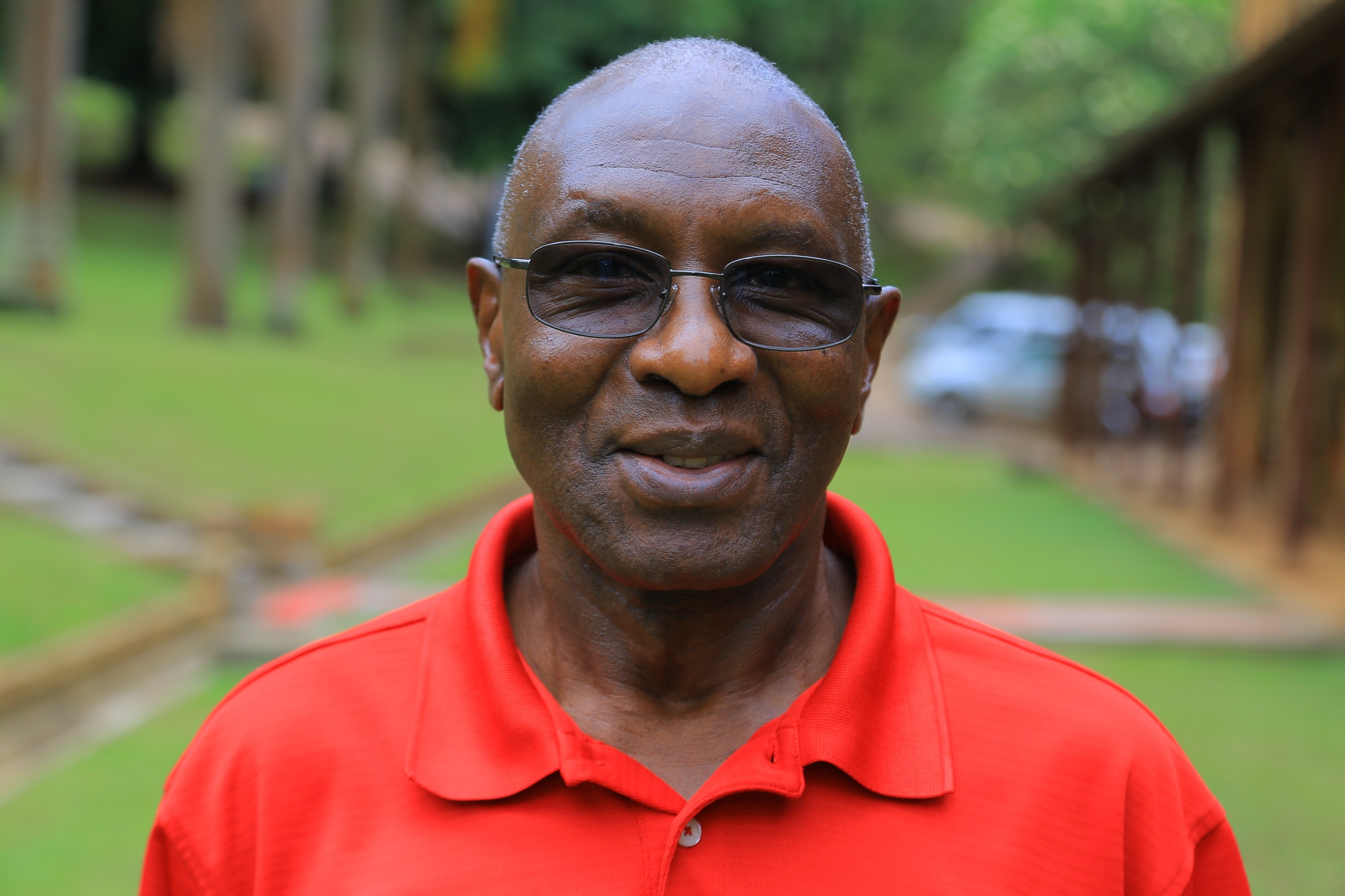
Prof. Kiwanuka-Tondo holds a PhD in Communication Sciences (University of Connecticut), MA. Communication Sciences (University of Connecticut), M A. University of Leicester, B A. Mass Communication (Honors), Makerere University, and an Advanced Journalism and Public Relations, International Institute for Journalism, Berlin, West Germany. His main area of research is health communication campaigns with emphasis on HIV/AIDS. His major contribution to the field of communication has been the development of the first quantitative model of relationships between organizational factors, campaign planning, and campaign execution variables.
Prof. Kiwanuka-Tondo has made a significant contribution to the understanding and promotion of community-engaged scholarship and the integration of indigenous knowledge in research. He has made a significant contribution to the building of knowledge and capacity in conducting research by mentoring fellow faculty and graduate students at Uganda Christian University, North Carolina State University, Makerere University, and University of Rwanda. As editor of the African Journal of Communication which is published by the East Africa Communication Association (EACA), he has promoted scholarship by faculty and graduate students in the sub-region and beyond. He has published an edited book on HIV/AIDS in Uganda, 18 peer-reviewed journal articles, four peer-reviewed book chapters, one peer-reviewed conference proceeding, and four peer-reviewed research reports. He has been a principal investigator (PI) on several research grants. In recognition of his contribution to scholarship and teaching, he has received numerous awards such as the Alexander Quarles Holladay Medal for excellence in research, teaching, and engagement at North Carolina State University in 2021. This is the most prestigious award a professor can get at North Carolina State University. He was recognized as a member of the Academy of Excellence in Global Engagement for outstanding achievements in international education and research, North Carolina State University in 2019.
ASSOC. PROF. ELIZABETH BALYEJUSA KIZITO ( PROFILE)

Assoc. Prof. Balyejusa holds a PhD in Plant Breeding and Biotechnology from the Swedish University of Agricultural Sciences, Uppsala, Sweden. She is the current President, All Africa Horticultural Congress. Additionally, she is a fellow, Higher Education Resource Services (HERS), East Africa; a Fellow, Science by African Women and a Norman E. Borlaug International Agricultural Science and Technology Fellow.
She has harnessed the potential of her work on African Indigenous Vegetables to address food, nutrition and income security in Uganda and the region. African Indigenous Vegetables fall in the category of neglected and underutilized species due to the fact that they have traditionally received limited research attention globally. As such they are characterized by not being known and traded globally and their potential to address food and nutrition challenges in Sub-Saharan Africa have not been harnessed. However, they form an integral part of diets in many Sub-Saharan African (SSA) countries. There is a growing trend in their production and trade within Africa and they provide significant contribution to food and nutrition security, especially for small scale farmers especially women. Elizabeth has contributed to pioneering breeding work of Solanum aethiopicum commonly called the African Eggplant or Nakati employing both molecular and conventional breeding techniques to enhance the crop’s yield, productivity and resilience to drought. She has led projects with partners and colleagues to identify priority Nakati cultivars for breeding purposes; she developed a phenotyping protocol for Nakati under drought stress and the de novo genome sequence of S. aethiopicum. Her work culminated in the release of three Nakati varieties in 2021 by the Ministry of Agriculture, Animal Industry and Fisheries. These varieties are the first of their kind in Uganda and Africa. These varieties are now reference materials i.e. provide the standardized, reliable resource for testing and comparison at MAAIF. The breeding of new varieties is an avenue that can contribute significantly to improving rural income and overall economic development especially with higher yields and increased value and marketability of the crop.
Above all, availability of these AIV varieties can go a long way in addressing the rising malnutrition statistics in Uganda where 49% of children are anaemic, 38% deficient in Vitamin A and a third of all children are stunted.
Uganda Christian University (UCU) has expressed readiness to host Inter-University games that will
Renowned for its research excellence, the Uganda Christian University (UCU) Faculty of Agricultural

Home Students Research Academics About Us Contact Us X UCU student narrates journey

UCU engaged in phase 2 of Uganda’s yellow fever vaccination campaign By Irene