
UCU to host AUUS Games 16th Dec 2023
Uganda Christian University (UCU) has expressed readiness to host Inter-University games that will

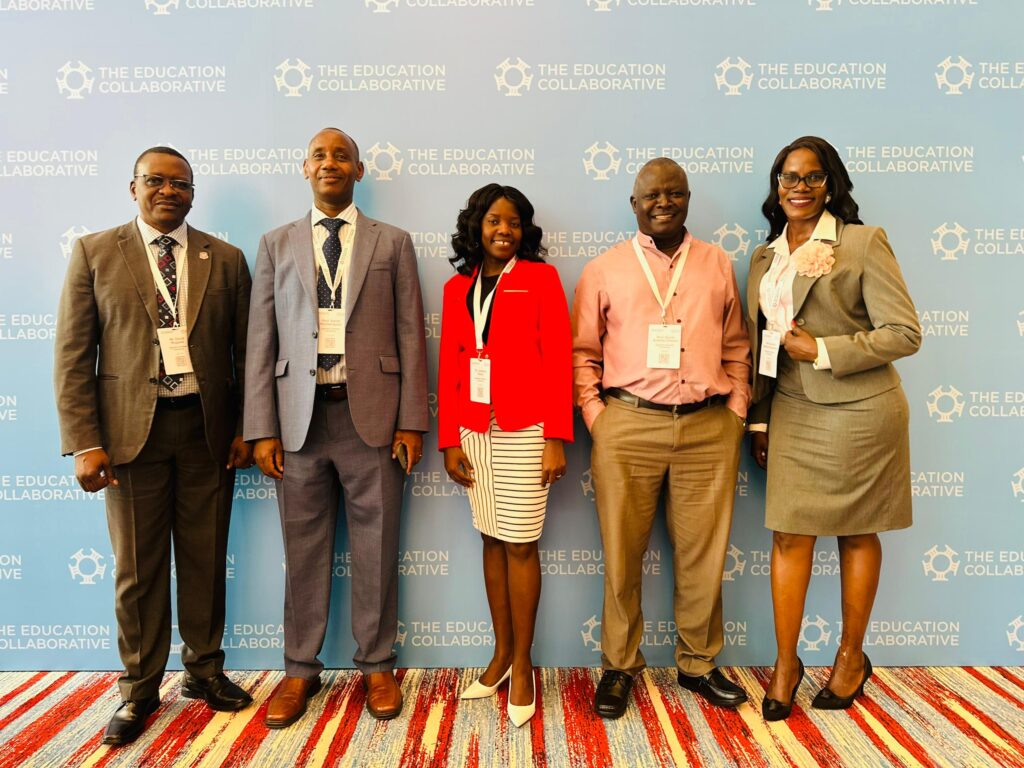
A team from Uganda Christian University (UCU) led by Vice Chancellor Canon Prof. Aaron Mushengyezi joined over 300 participants from across the continent at the Education Collaborative’s June 2025 Convening, held from June 17–20 at the Kigali Marriott Hotel, Rwanda. The convening brought together institutions of higher learning from 16 countries, with over 73 speakers and 38 sessions all focused on reimagining the student experience in African universities.
Representing UCU alongside the Vice Chancellor were Mr. David Mugawe, Deputy Vice Chancellor for Finance and Administration; Rev. Assoc. Prof. David Andrew Omona, Director of the UCU Africa Policy Centre; Dr. Jackline Bwire, Lecturer at the School of Social Sciences; and Mrs. Harriet Adong Atuyambe, Director of Communication and Public Relations.
This year’s convening theme “Recentering Student Development: Reflecting, Mobilizing, and Realigning for a Transformational Student Experience” challenged universities to rethink their educational models by placing the student at the heart of their missions. Participants reflected on past practices, mobilized new ideas and strategies, and shared experiences for creating student-centered approaches that promote academic, personal, and professional growth.

Throughout the four days, the UCU delegation engaged deeply in discussions covering career and employability, ethics and leadership, entrepreneurship, and research—areas which align closely with UCU’s strategic focus.
In one of the memorable moments of the convening, the UCU team had a brief exchange with counterparts from Cavendish University Uganda. “In community service, we are not competing, we complement each other,” read a remark shared by UCU’s Director of Communication and Public Relations, Mrs. Harriet Adong Atuyambe, emphasizing the collaborative spirit that defined the convening.
The sessions further offered numerous takeaways for African institutions: the importance of treating and teaching students as leaders, not just learners; the urgency of embracing creativity and innovation, especially through artificial intelligence; the need for critical thinking and mindset change; and the power of intra- and inter-institutional collaboration. Other key insights focused on inclusive education and performance-based learning outcomes.
In another notable interaction, UCU team members held a quick discussion with Mr. Jalal Charaf, Chief Digital Officer at Mohammed VI Polytechnic University in Morocco. Mr. Charaf had earlier delivered an impactful presentation on the strategic adoption of Artificial Intelligence (AI) in education. “AI is here to stay,” he said, prompting institutions to re-evaluate how technology is being integrated into teaching, learning, and administration.
The convening was also an opportunity for participants to learn, un-learn, and re-learn, especially in areas of student support, institutional accountability, and technological adaptation. “It is not about asking what students have learned, but what they can do and how they apply their learning,” one session discussion emphasized.

UCU joined the Education Collaborative in 2023, affirming its commitment to strengthening higher education in Africa through partnerships, mentorship, and knowledge sharing. The 2025 convening marked another step forward in this journey, with the UCU team embracing new ideas while showcasing the university’s impactful initiatives back home.
Lessons Learned
Uganda Christian University (UCU) has expressed readiness to host Inter-University games that will

Renowned for its research excellence, the Uganda Christian University (UCU) Faculty of Agricultural

Home Students Research Academics About Us Contact Us X UCU student narrates journey

UCU engaged in phase 2 of Uganda’s yellow fever vaccination campaign By Irene