

By Jimmy Siyasa
KALANGALA, 17 November 2026: What should every Uganda Christian University (UCU) graduate be able to do by 2030, whatever their programme? And when artificial intelligence can produce a convincing essay in seconds, what evidence would show that a student has truly learnt?
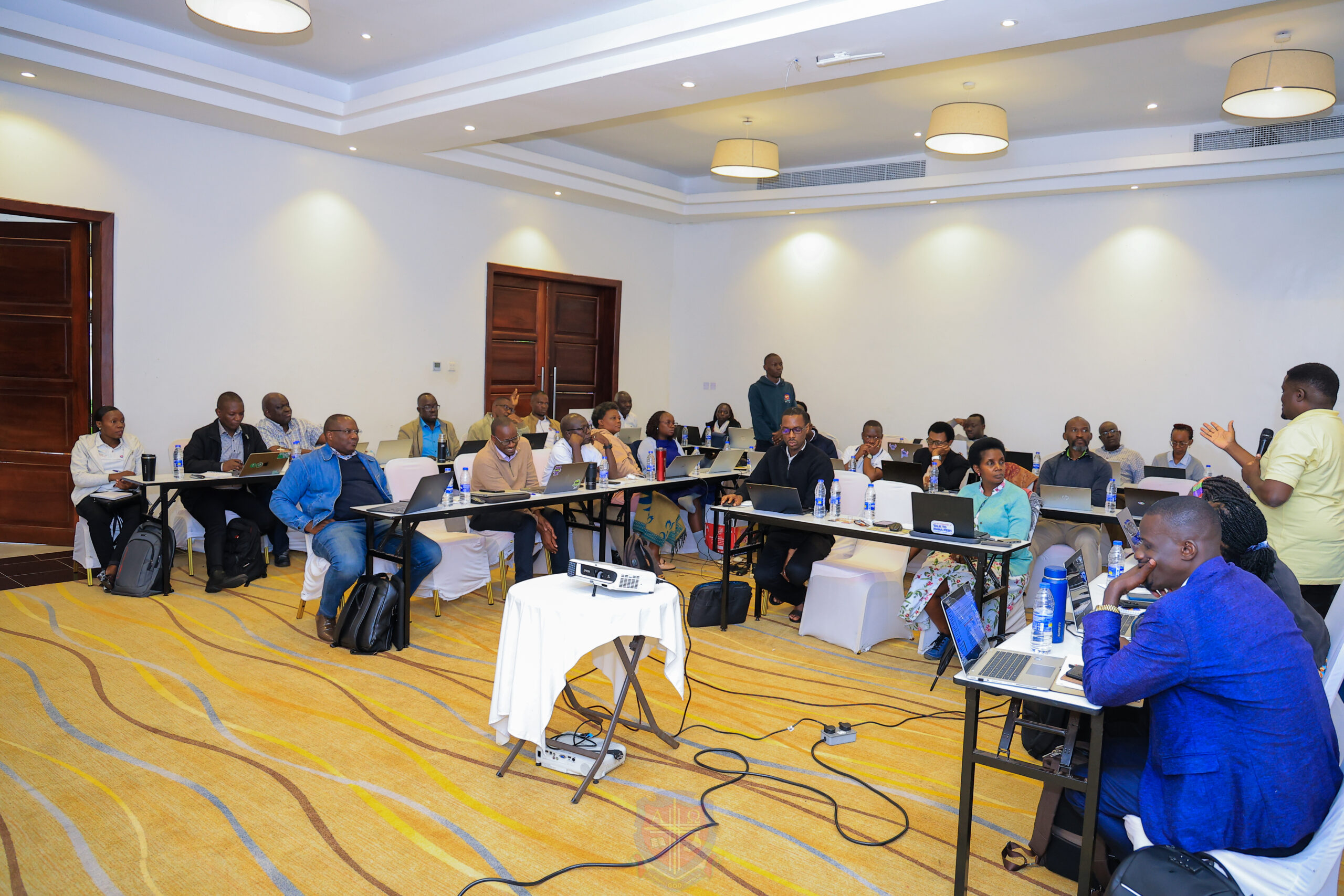
These are among the questions occupying a large delegation of UCU academic staff, administrators, and junior and senior managers at a week-long retreat on Curriculum Reimagination and Harmonisation, which opened on Monday, 16 November, at Brovad Sands Lodge in Kalangala. Running until Saturday, 21 November, the retreat has a practical and demanding agenda: to review, strengthen and harmonise more than 120 curricula, present them to a special sitting of the University Senate on Friday, 20 November, and send approved programmes on through the National Council for Higher Education (NCHE) submission process.
From content covered to capability shown
University programmes have long been organised around content: the topics to be covered, the contact hours to be logged and the examinations to be sat. CBET reverses that logic. A programme begins with the competences a graduate should demonstrate, and teaching, assignments and examinations are designed backwards from there.
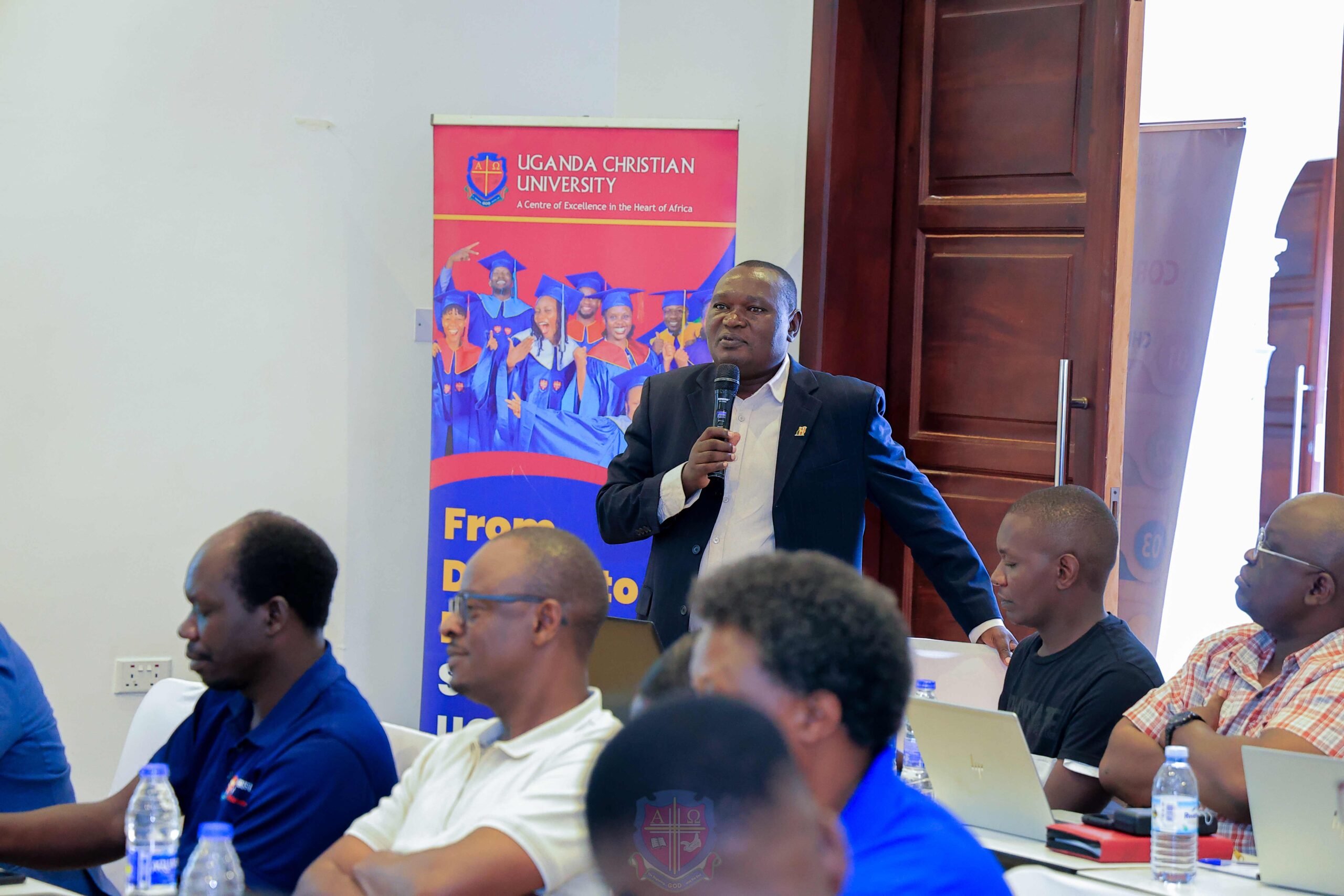
Dr Richard Ouma, Senior Higher Education Officer at NCHE, set out what this means in his keynote, From CBET Standards to Approvable Curricula: What NCHE Will Examine. Under the traditional model, he explained, assessment tends to emphasise recall and end-of-course testing (exams), while links with industry and communities appear as optional. Under CBET, learning outcomes guide content, teaching and assessment; assessment requires authentic evidence of performance; and workplaces and communities become part of the curriculum’s design.
Some of the changes are concrete enough to measure. Continuous, formative assessment must make up at least half of a student’s total mark, with summative assessment such as final examinations capped at 50 per cent, and each must be passed independently. Programmes are measured in credits, where one credit represents ten notional hours of a typical student’s effort, counting self-study, assessment and practical work as well as lectures.
Dr Ouma also presented NCHE’s template for the development and review of competence-based programmes, the guiding document against which submissions will be examined, and commended UCU for acting quickly to realise the national CBET framework.
A question larger than compliance
UCU’s own framing reaches beyond meeting a regulatory standard. In his address, the Deputy Vice Chancellor for Academic Affairs, Rev. Assoc. Prof. John Mulindwa Kitayimbwa, began not with formats but with purpose: what must a university education now accomplish?
His answer was that a graduate should understand deeply, act competently, judge responsibly and serve faithfully. The abundance of information and the rise of AI make the question sharper; as one of his slides put it, “A polished answer does not establish the learner’s understanding.” A degree, in this view, is a promise to society, and evidence must support it.
“We are exploring diverse modes of participatory delivery of teaching and learning services,” Rev. Assoc. Prof. Kitayimbwa said of the retreat and related initiatives.
The University’s Reimagination Agenda rests on eight connected pillars: curriculum re-architecture; applied and experiential pedagogy; assessment reform; research-infused education; innovation, enterprise and industrialisation; AI, digital and data capability; Christian formation and public trust; and faculty and people development. At the centre sits the learner and what UCU calls the “graduate promise”, a clear statement, for each programme, of what its graduates should be capable of doing and becoming.

What it could look like in practice
To show how the pillars connect, the DVC’s presentation offered an illustrative design built around a community water project. Students study the science and context, investigate with the community’s consent, analyse evidence and verify any AI assistance, develop and test a response, examine cost, equity and stewardship, and finally defend their findings and revise. This means, one real problem, can draw on research, technology, enterprise and Christian ethics at once.
Assessment follows the same thinking. Alongside examinations, programmes are encouraged to use projects and portfolios, supervised performance, oral defence, and feedback with revision, and to specify what use of AI is permitted for each task. The guiding test is whether a student can explain, defend and reproduce the relevant learning.
However, the model is not meant to produce identical graduates. A health professional, an engineer and a theologian will demonstrate competence differently: clinical reasoning and patient dignity in one case, design and safety in another, interpretation and pastoral practice in a third.
Background: Uganda’s move to CBET
The retreat responds to a national reform. In July 2025, the Ministry of Education and Sports directed all universities and tertiary institutions to adopt CBET, beginning with first-year intakes in the 2027/28 academic year, when the first learners from Uganda’s competency-based lower secondary curriculum are expected to reach university.
In February 2026, NCHE approved the Minimum Standards for Implementing CBET in Higher Education Institutions, which guide how programmes are designed, delivered, assessed and accredited, and the Council has since begun assessing realigned university programmes ahead of their approval for the 2027/28 intake.