
By Irene Best Nyapendi & Blessing Twiine
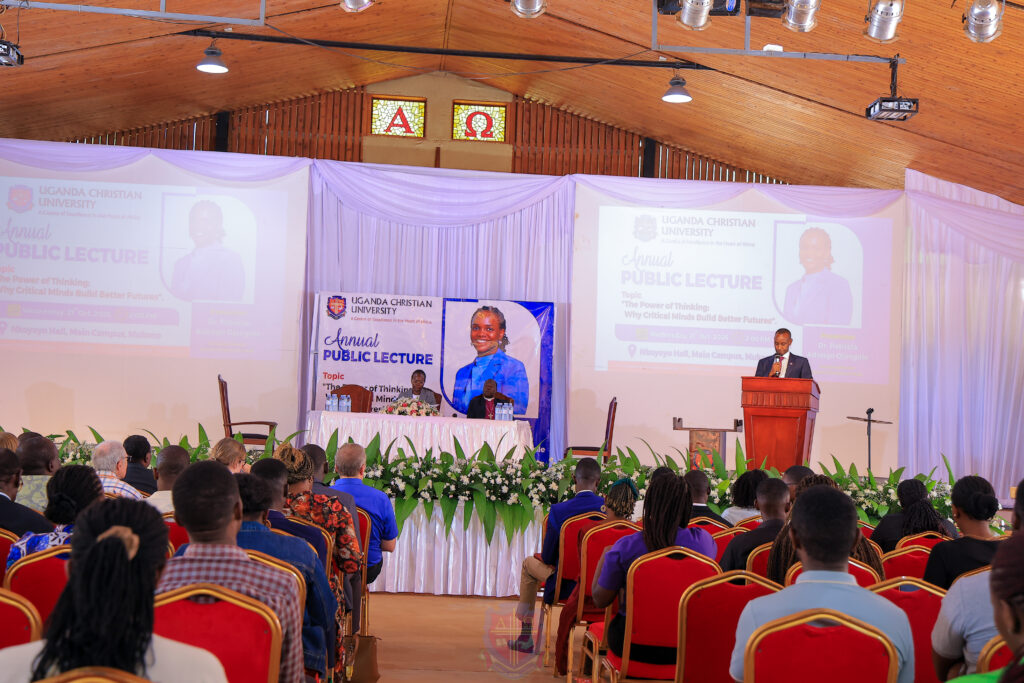
Mukono, 21 October 2026 – Uganda Christian University (UCU) held a public lecture at Nkoyoyo Hall on its Main Campus in Mukono today, bringing together university staff, industry leaders, students and other participants to explore how critical thinking can strengthen leadership, institutions and Uganda’s future.
Speaking under the theme “The Power of Thinking: Why Critical Minds Build Better Futures,” Uganda Development Bank Managing Director Dr. Patricia Adongo Ojangole urged participants to think independently, ethically and creatively rather than rely on memorisation and the repetition of information.
However, one capability, she said, will always remain valuable: “the ability to think, not merely to know, not merely to repeat, and not merely to pass examinations.”
Introducing the chief guest, the Vice Chancellor said Uganda and Africa are yearning for leaders who will not settle for business as usual. He called for people who will transform the private sector, roads and bridges, schools, the education sector, and a church that is more innovative and self-reliant.
“We are here to raise a new generation that is going to cause positive transformation wherever the Lord takes us,” he said. He added that management is working to place UCU in the league of internationally recognised universities, and that “we need to spend more time doing than talking.”
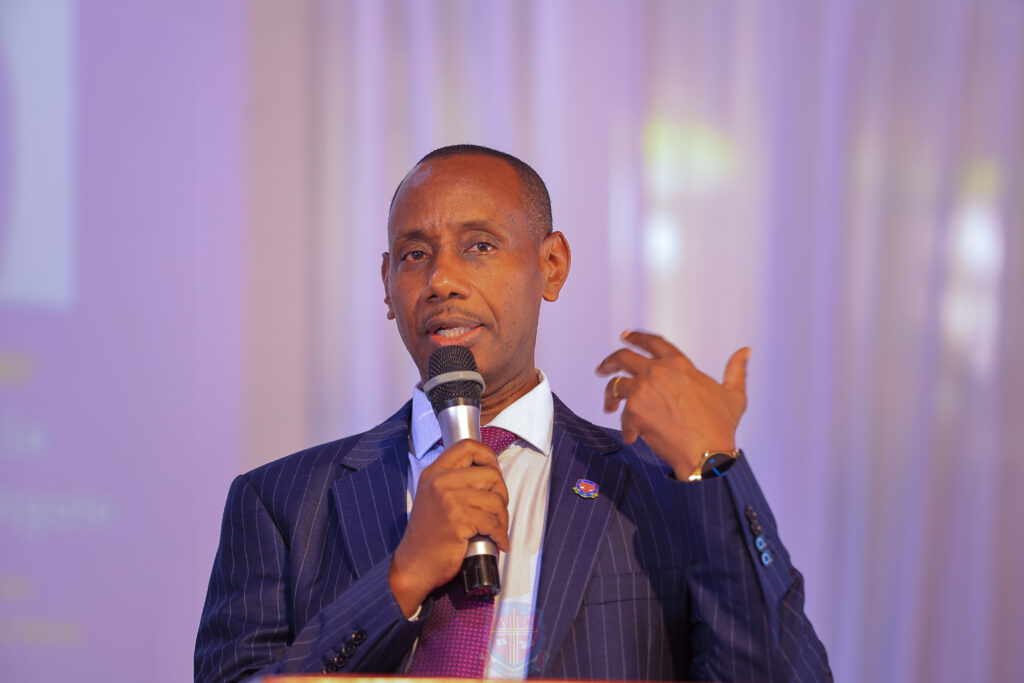
He presented Dr. Ojangole as an example of that renewal: a born-again Christian whom God has used “in a mighty way in the banking sector.”
Dr. Ojangole drew on her own experience at UDB, when the bank finalised its new strategic plan.
“The careers of the future may not yet exist. The challenges you face may not yet be fully understood,” she said. She urged participants to think independently, ethically, creatively and courageously, and to become active creators of ideas rather than passive consumers of information.
“If we desire stronger institutions, we need better thinkers. If we desire better leadership, we need better thinkers,” she said. The same, she added, holds for more innovative businesses and a more prosperous Uganda and Africa.
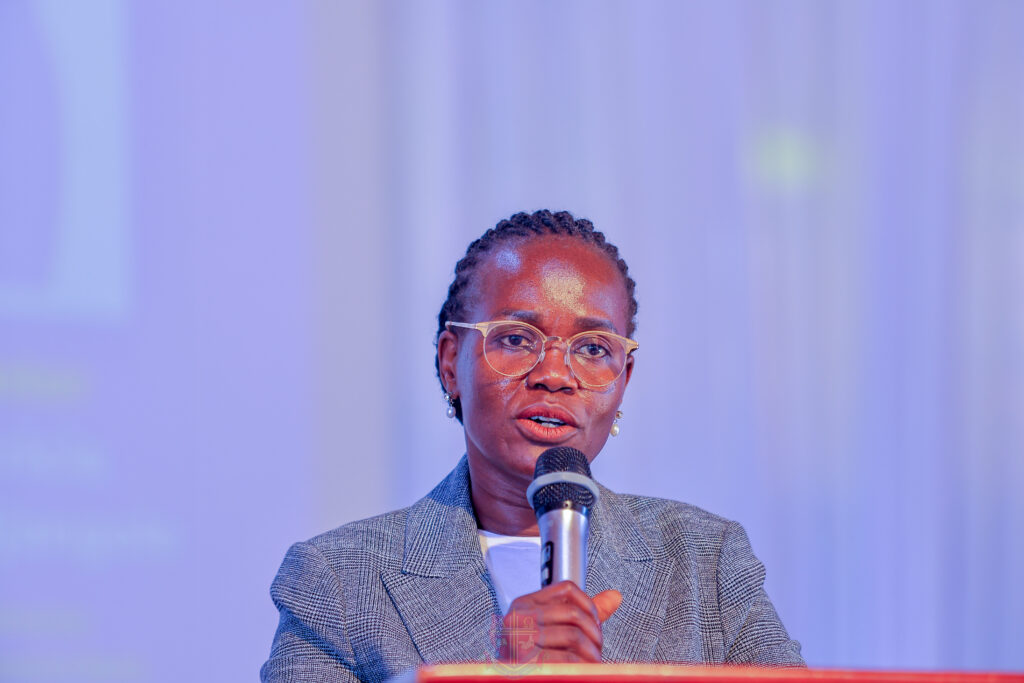
The task of universities, she argued, is not simply to pass on information. It is to produce thoughtful men and women who are guided by truth, grounded in values, committed to excellence and brave enough to think for themselves. She closed with 1 Thessalonians 5:21, which calls believers to examine everything carefully and hold firmly to what is good.
Dr. Ojangole tied critical thinking to youth unemployment. The problem, she said, is not a shortage of ideas; young people are “ideating everywhere.” The challenge is turning those ideas into projects, products and incomes.
She said UDB is working with universities on an innovations programme to commercialise ideas coming out of campuses. The bank is also rolling out Reshaping Industry for Sustainable Economy, a platform where anyone can post a social, environmental or economic challenge and have it developed into a bankable opportunity.
She gave the example of smallholder farmers who lack access to markets and sell to middlemen at farm-gate prices. A challenge like that, posted and analysed, can point to solutions, stakeholders and investment.
During the question session, Dr. Julianne Sansa-Otim, a former UCU staff member now serving as a school principal, asked how a leader with a busy schedule makes time for critical thinking.
Dr. Ojangole replied that critical thinking is not criticism, arguing or endless questioning. It is analysing the information before you so that you can make a sound decision. When a letter lands on her desk, she said, she may send it to the finance, legal or business teams to gather evidence and weigh scenarios.
“At the end of the day, you must make a decision,” she said. The questions must stop at clear criteria: is the option less costly, and are its consequences manageable? Daily life, she added, presents enough problems to think about; the habit is to evaluate before deciding, so the decision can be defended and justified.
Giving closing remarks, the Rt. Rev. Dr. Alfred Olwa recalled his doctoral studies at Moore College in Sydney, which began in 2009. His research examined the doctrine of reconciliation in the preaching of Bishop Festo Kivengere of Uganda between 1971 and 1988.
His supervisor, Rev. Prof. Peter Bolt, insisted that the two of them spend 30 minutes every Monday after breakfast doing nothing but thinking. Bishop Olwa admitted he first protested that this was “not culturally appropriate.” Yet Mondays have remained his day of prayer and thinking ever since.
He drew laughter with a story about babysitting his grandsons. When the older boy asked how many pupils were in his P3 class and he could not remember, the youngest, in P1, suggested: “Let’s ask the AI.” A culture of thinking, he said, must be built early, in the family and in school.
He rejected the idea that faith and hard thinking pull in opposite directions, pointing to Jesus’ command to love God with all one’s mind, Isaiah’s “come now, let us reason together,” and the Bereans who examined the Scriptures daily. “Critical minds build better futures,” he said. “Let me add, uncritical minds can quietly destroy them.”
In an age of misinformation, he warned, the danger for young people is not a lack of information but handing their judgement to whoever shouts loudest. Yet he also cautioned that a mind which criticises everything but submits to nothing becomes proud. Citing UCU’s motto, Alpha and Omega, he said: “We do not think instead of God. We think in the light of God” – with a mind “sharpened by study and softened by grace.”
He charged students to ask hard questions, read widely and “refuse to swallow anything whole, including what your lecturers tell you.” He asked academic staff to keep teaching students how to think, not only what to think.
“Let us leave this hall not just better informed, but better formed,” he concluded, before thanking Dr. Ojangole, the Vice Chancellor, and Prof. Elizabeth Kizito and the team who organised the lecture.

UCU researchers develop three new nakati varieties
Renowned for its research excellence, the Uganda Christian University (UCU) Faculty of Agricultural
UCU Celebrates 26th Guild Government Swearing-In
Home Students Research Academics About Us Contact Us X UCU student narrates journey
UCU engaged in phase 2 of Uganda’s yellow fever vaccination campaign
UCU engaged in phase 2 of Uganda’s yellow fever vaccination campaign By Irene
“Make Generosity a LifeStyle,” UCU Community Urged.
“Make Generosity a LifeStyle,” UCU Community Urged Uganda Christian University (UCU), in partnership